
 EN
EN
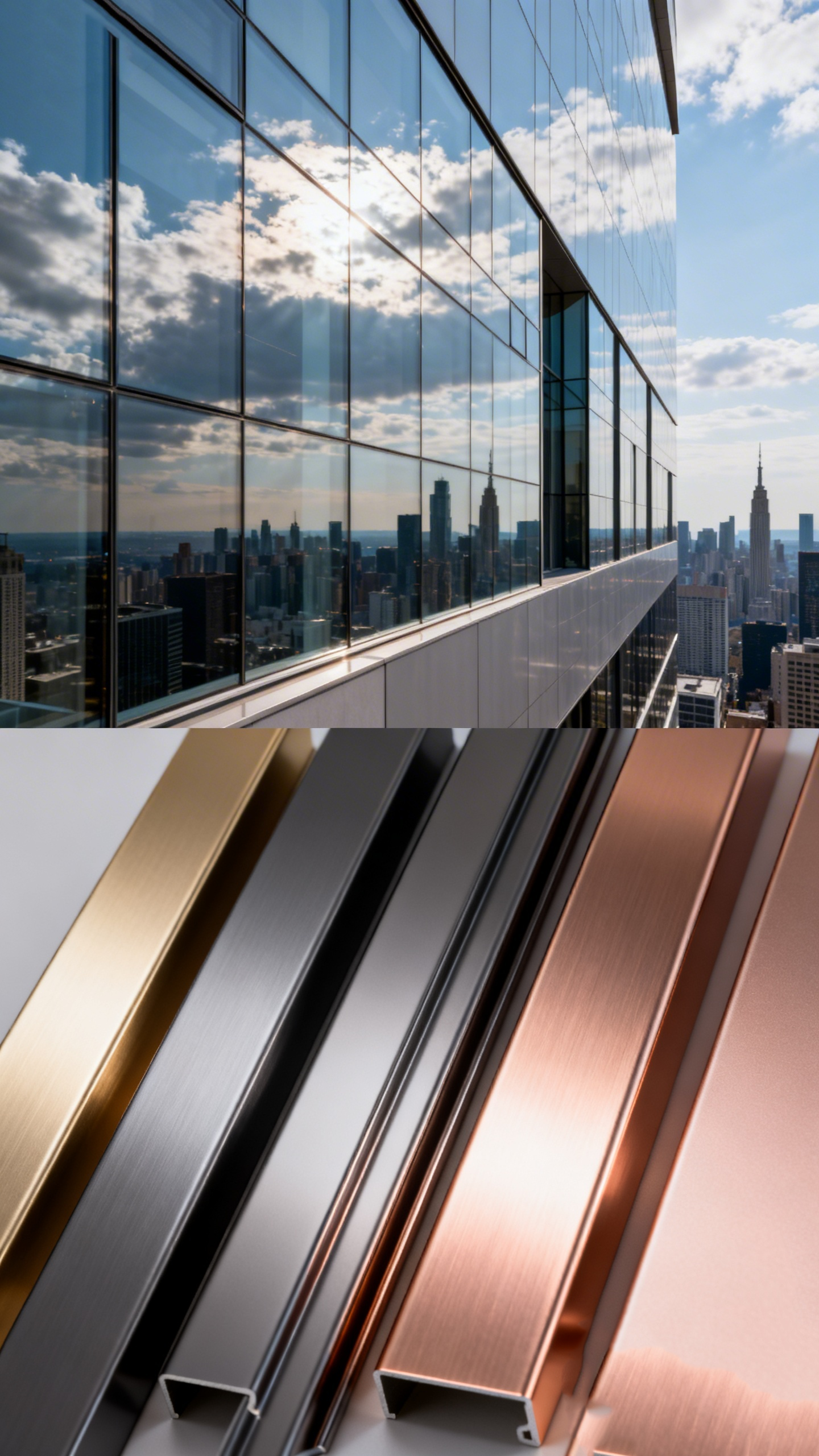
Powder Coating Aluminium Profiles: Broad Colour Freedom with Industrial-Grade Protection
Adhesion & Curing Science: Why Powder Coating Excels on Aluminium Profile Substrates
When it comes to powder coating on aluminium profiles, the process works mainly because of electrostatic forces. Basically, the powder particles get charged and stick evenly across whatever surface is grounded. Afterward, heat causes them to melt together and form a chemical bond with the natural oxide layer that forms on aluminium. What we end up with is basically one solid piece without layers peeling off easily. Real world tests show these coatings can last between 18 to 20 years outside without much fading at all according to Wellste's research from 2024. This long lasting performance speaks volumes about how well the materials work together chemically and structurally over time.
Real-World Performance: UV Stability (>5,000 hrs QUV), Impact Resistance (20 N·m), and Long-Term Gloss Retention
Industrial-grade powder coatings deliver proven, quantifiable resilience:
- UV stability: Exceeds 5,000 hours in accelerated QUV testing—significantly outperforming conventional liquid paints
- Impact resistance: Withstands 20 N·m impacts without cracking, making it suitable for high-traffic architectural elements
- Gloss retention: Maintains >85% initial reflectivity after decades of exposure; studies show gloss loss of less than 5 units after 10 years in temperate climates
Super-durable formulations achieve 15–25 year colour stability in façade applications, directly reducing lifecycle costs through extended service life and fewer replacements.
Complementary Surface Treatments for Aluminium Profiles: Electrophoretic Coating and Mechanical Finishing
Electrophoretic Deposition (EDP): Uniform Coverage for Complex Aluminium Profile Geometries
Electrophoretic Deposition, or EDP for short, works by using an electric field to push charged paint particles toward grounded aluminum profiles. This creates really uniform coverage without any gaps or voids, something that's tough to achieve with traditional spray methods especially when dealing with hollow parts, sharp corners, or those hard to reach recessed areas. The process gives pretty consistent coating thickness too, usually within about 5 micrometers of each other, and covers edges much better than most alternatives. Testing according to ASTM B117 salt spray standards shows that these treated profiles last about 40% longer against corrosion compared to regular liquid coatings. That makes EDP particularly useful for things like marine hardware components, facade mounting brackets, and heat sink designs where good protection is needed despite complicated shapes and structures.
Polishing, Brushing, and Embossing: Defining Texture, Reflectivity, and Tactile Identity of Aluminium Profiles
Surface finishing techniques modify how materials look and feel by applying controlled abrasion or pressure during manufacturing. For instance, mirror polishing can get surfaces reflecting over 90% of light, making them ideal for high end decorative applications. Brushing creates those nice satin finishes that hide fingerprints while cutting down on glare by around 60% when used in lighting fixtures. Then there's embossing which adds all sorts of useful textures like wood grain or geometric designs to improve grip and help products stand out from competitors. All these methods tweak the surface roughness somewhere between Ra 0.1 and Ra 3.2 micrometers. This adjustment helps strike the right balance between appearance, how long things last, and actual usability without compromising the material's basic structural integrity.
Selecting the Right Surface Treatment for Your Aluminium Profile Application
Choosing the optimal surface treatment hinges on three interdependent factors: environmental exposure, mechanical demand, and aesthetic intent.
- In coastal, industrial, or chemically aggressive settings where long-term corrosion resistance is non-negotiable, anodising delivers 2–3Å surface hardness and verified 50-year durability per architectural test standards.
- When broad colour versatility, impact resilience (>20 N·m), and UV stability (>5,000 hrs QUV) are critical—as in retail façades, transit shelters, or consumer-facing building elements—powder coating is the benchmark solution.
- For parts with intricate geometry—such as extruded heat sinks, multi-chambered framing, or detailed architectural trim—electrophoretic deposition ensures complete, repeatable coverage where other methods fall short.
Always align your profile’s functional requirements with independently validated performance data. Mismatched treatments can cut service life by up to 40% in high-stress or high-exposure applications.
FAQ
What makes powder coating a superior choice for aluminium profiles?
Powder coating provides excellent adhesion due to electrostatic forces, forming a long-lasting chemical bond with aluminium's oxide layer, resulting in durable and resilient finishes that last up to 18-20 years outdoors without significant fading.
How does Electrophoretic Deposition (EDP) benefit aluminium profiles?
EDP provides uniform coverage even on complex geometries of aluminium profiles, ensuring better corrosion resistance and consistent thickness. It proves especially useful for items requiring robust coatings in difficult-to-reach areas.
Why is surface finishing important for aluminium profiles?
Surface finishing like polishing and brushing enhances the texture, reflectivity, and tactile feel of aluminium profiles. These techniques contribute to the aesthetic appeal and functional performance without compromising structural integrity.