
 EN
EN
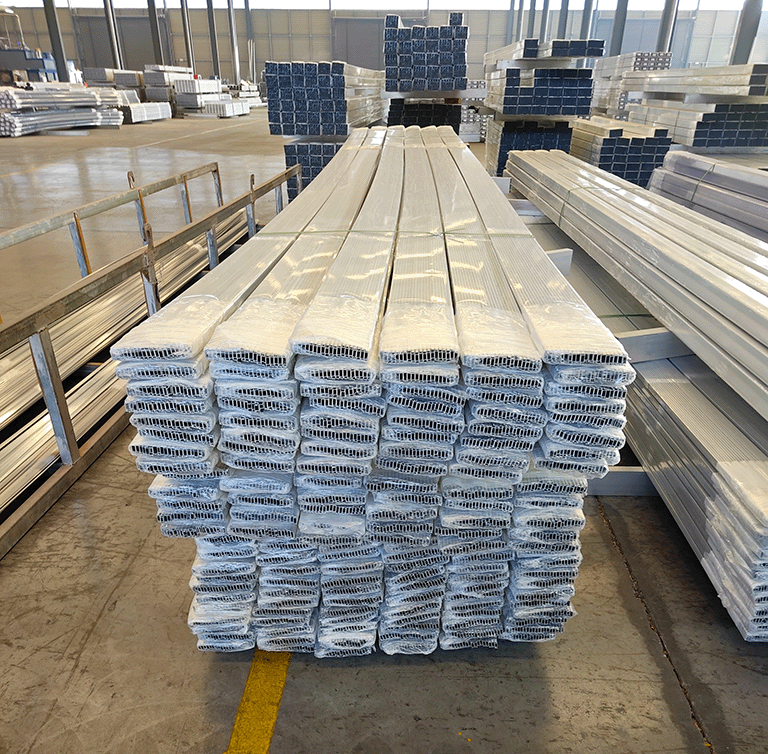
Why Custom Aluminium Profile Solutions Are Essential for Industrial Innovation
The world of industrial innovation is asking for parts that really match what specific projects need. Regular aluminum profiles just don't cut it anymore because they push designers into making compromises that hurt performance, especially when working on things like high precision automation equipment or parts for airplanes. That's where custom made aluminum profiles come in handy. These special solutions let manufacturers tweak shapes, pick different alloys, and build in extra functions right from the start. Getting rid of those extra joints saves money in the long run and makes structures stronger without adding bulk. Plus, these custom extrusions fit better in tight spaces, which matters a lot in factories where every inch counts and machines have to work under tough conditions day after day.
Beyond just making things work better, there's another big plus to consider. When companies use custom profiles, they can pack several different functions into one single design. This cuts down on how long it takes to put parts together and also means less wasted materials during manufacturing. For businesses producing large quantities, this kind of integration can bring down costs significantly over time, sometimes cutting expenses by around a third. Plus, getting prototypes ready happens much faster than traditional methods. Many manufacturers are moving toward modular setups these days, and these specially designed components fit right into that approach. They scale easily and connect well with whatever equipment is already in place at factories. That's why so many tech-focused industries rely heavily on custom aluminum profiles. These aren't just theoretical ideas anymore; they're actual products coming off assembly lines across various sectors where staying ahead of competitors matters most.
Designing High-Performance Aluminium Profile Geometry for Critical Applications
Optimizing Cross-Sectional Design for Structural Integrity and Thermal Management
Getting the best out of industrial applications means working with precisely engineered aluminum profiles. When walls are uniformly thick throughout, it helps materials flow evenly during extrusion processes, which cuts down on internal stresses and actually makes the final product stronger under weight. Studies on extrusion efficiency show something interesting too: rounded corners instead of those sharp angles can boost structural strength by around 30%. Thermal management is another big consideration. Profiles with built-in channels or hollow sections cool things down much quicker than solid ones do, probably about 40% faster if we're talking numbers. What this all adds up to is a custom aluminum profile that can handle roughly 15% more mechanical stress while keeping temperatures lower in systems where power matters most. Before any real manufacturing happens though, engineers run these calculations through finite element analysis software to check everything works as expected in practice.
Application-Specific Profiles in Automotive, Aerospace, and Precision Automation
Sector-specific demands drive unique geometric solutions:
- Automotive: Crash-resistant profiles with asymmetric energy-absorbing channels reduce vehicle weight by 25% versus steel
- Aerospace: Thin-walled profiles maintain 95% strength while cutting airframe mass, enabling 7% fuel savings per flight cycle
- Precision Automation: Profiles with ±0.05mm tolerance and integrated mounting slots ensure vibration-free robotic arm calibration
In aerospace, custom geometries also improve aerodynamic efficiency—and when fabricated from recycled aluminium, profiles can reduce lifecycle emissions by 72%, per a 2023 study. These application-tailored approaches demonstrate how strategic geometry transforms standard extrusions into mission-critical components.
Material Selection and Feature Integration in Aluminium Profile Extrusion
6061 vs. 6063 Aluminium Alloys: Matching Strength, Finish, and Fabrication Needs
Choosing the right metal alloy makes all the difference when trying to get good structural performance while keeping production costs reasonable. Take 6061 aluminum profiles for instance they have really strong tensile properties around 45 ksi give or take and stand up well against repeated stress cycles. That's why this grade works so well in parts that need to carry weight such as industrial robot joints. On the other side of things, 6063 aluminum focuses more on how it looks after processing and stands up better to environmental factors. Architects often prefer this material for building exteriors and interior design elements where appearance counts just as much as function. When picking between these options, manufacturers should think about what their specific application demands most.
- Fabrication needs: 6063 extrudes 15–20% faster than 6061, reducing production costs
- Post-processing: 6061 withstands heavy machining; 6063 suits anodizing
- Thermal limits: 6061 retains strength at higher temperatures (150°C vs. 6063’s 100°C)
A 2024 industrial survey revealed 67% of manufacturers standardize on 6061 for structural frames, while 72% use 6063 for visible components requiring Class-A finishes.
Built-In Functional Features: Cable Channels, Mounting Slots, and Asymmetric Sections
When manufacturers integrate various features right into aluminium profiles, they create systems that do multiple jobs at once without needing extra parts put together later. The way cable channels are designed can cut down on wiring work by around 40 percent for automated machinery. Plus, those T-shaped slots let engineers change configurations quickly without tools, which saves time during maintenance or upgrades. Some profiles have asymmetric shapes that might be harder to produce through extrusion processes, but these designs actually save significant weight when used in aircraft components. Looking at how products are made from the start is really important too. Good Design for Manufacturability practices help ensure everything works well together without unnecessary complications down the line.
- Limiting channel depth-to-width ratios to ≤ 3:1 to prevent die fracture
- Avoiding sharp internal corners (maintain ≥ 0.5mm radii)
- Standardizing slot dimensions across profiles
Ensuring Manufacturability and System Integration of Custom Aluminium Profiles
Successfully implementing custom aluminium profile solutions hinges on balancing innovative design with practical production realities. Industry studies reveal that projects incorporating manufacturability considerations early reduce prototyping cycles by 30–50% while avoiding costly late-stage redesigns. This demands a holistic approach spanning material behavior, tolerance thresholds, and integration pathways.
Design for Manufacturability (DFM) Principles in Aluminium Profile Development
Applying Design for Manufacturability (DFM) principles ensures extrusion feasibility while minimizing waste. Key strategies include:
- Wall Uniformity: Maintaining consistent thickness (typically ≥1mm) prevents distortion during cooling
- Draft Angles: Incorporating 1–3° angles on perpendicular surfaces eases die release
- Radii Optimization: Generous internal radii (>0.5mm) reduce stress concentrations in dies
Leading suppliers achieve dimensional accuracies to ±0.05mm—even for small-batch production starting at 300kg—as validated by precision engineering benchmarks. This precision enables direct integration of functional features like T-slots or thermal breaks without secondary machining, slashing production costs by up to 40%.
Modular Assembly Strategies and Interoperability with Standardized Systems
Modular aluminium profile architectures leverage standardized connectors and accessories to accelerate deployment. Compatibility with global systems—including ISO metric profiles—ensures:
- Cross-platform bracket interoperability
- Tool-less reconfiguration for layout changes
- Scalable structural expansions without welding
This approach reduces assembly time by 60% compared to custom-welded frames while maintaining load capacities exceeding 500kg/m in testing. As industries increasingly adopt automated production lines, modularity enables seamless retrofitting with robotic arms and conveyor interfaces.
FAQ
What are custom aluminum profiles?
Custom aluminum profiles are specially designed extrusions that meet specific project requirements. They provide enhanced performance and integration by allowing modifications in shape, alloy selection, and additional built-in features.
How do custom aluminum profiles benefit industrial innovation?
By eliminating the need for compromises in design, custom aluminum profiles facilitate improved performance in critical applications. They allow for integration of multiple functions into a single profile, reducing assembly time, minimizing waste, and cutting costs significantly.
What are the differences between 6061 and 6063 aluminum alloys?
6061 aluminum alloy is known for its tensile strength and resistance to repeated stress, making it ideal for structural applications. On the other hand, 6063 aluminum is preferred for its aesthetic finish, quicker extrusion process, and suitability for environments requiring Class-A finishes.
Why is thermal management important in aluminum profiles?
Thermal management is essential because profiles with built-in channels or hollow sections dissipate heat more effectively, maintaining operational efficiency and prolonging the lifespan of systems, especially in power-intensive environments.
Table of Contents
- Why Custom Aluminium Profile Solutions Are Essential for Industrial Innovation
- Designing High-Performance Aluminium Profile Geometry for Critical Applications
- Material Selection and Feature Integration in Aluminium Profile Extrusion
- Ensuring Manufacturability and System Integration of Custom Aluminium Profiles