
 EN
EN
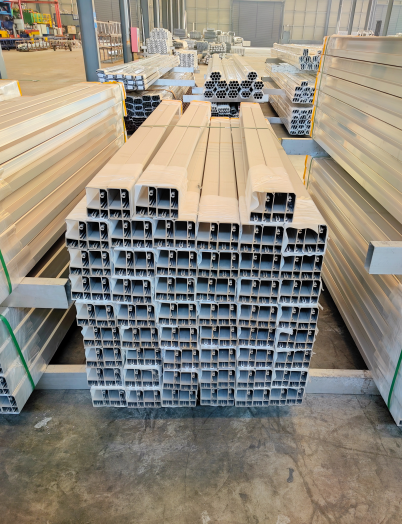
Geometric Flexibility and Profile Complexity in Aluminium Extrusion
Solid, Hollow, and Semi-Hollow Die Designs for Industry-Specific Profiles
The process of aluminium extrusion turns raw alloy billets into specific cross-sectional shapes through specially designed dies, each offering different benefits depending on what needs to be made. Solid dies create solid, continuous profiles like rods, beams and bars that can handle serious weight loads, which makes them perfect for things like building frameworks or parts of big machines. Then there are hollow dies with their carefully crafted mandrels that make those nice empty spaces inside materials. These are great for creating light but strong frames used in car safety structures and airplane bodies where strength matters but weight does too. And let's not forget semi-hollow dies either. They offer something in between by adding partial voids or useful features such as snap-fit grooves or channels for cables without all the hassle and expense of fully hollow tooling. This middle ground approach works wonders for electronic device casings and other modular assembly projects where functionality meets form.
It's possible to create complex multi-void parts with walls as thin as half a millimeter while still meeting ISO 2768 tolerance requirements, but this requires careful coordination between die design choices, material selection, and proper setup of processing conditions. The reality is that pushing too hard on geometry can cause problems down the line. Parts with very deep sections compared to their thickness or those featuring sharp inside corners tend to wear out dies faster, lead to inconsistent material flow during production, and ultimately result in higher rejection rates from the manufacturing process. Balancing what looks good on paper with what actually works in practice remains critical for successful part production.
| Profile Type | Typical Tolerance Range | Common Industrial Applications |
|---|---|---|
| Simple Solid Profiles | ±0.1mm | Structural supports, heat sinks |
| Multi-Channel Hollow | ±0.3mm | Hydraulic manifolds, robotic arm housings |
| Semi-Hollow w/Features | ±0.5mm | Modular enclosures, consumer electronics |
Balancing Complexity with Tolerances: When Design Freedom Meets Dimensional Control
When it comes to aluminium extrusion design, creativity meets reality at several points along the way. The actual limits aren't just about what someone can imagine, they're set by how metal flows during processing, heat distribution issues, and the mechanical constraints of tools used. Certain features like deep cavities, walls thinner than an 8:1 ratio, or sudden changes in cross-section create problems for manufacturers. These might lead to things like tool bending, weak spots where metal joins together, or inconsistent cooling rates across different parts of the profile. All these factors mean designers have to build in extra room for error. Take cars for example. Parts that need to fit together precisely often require tolerances around plus or minus 0.15 millimeters. But when looking at building facades or similar applications, there's usually more flexibility with tolerances up to 1.0 mm being acceptable while still maintaining good performance characteristics.
Research from the International Journal of Advanced Manufacturing Technology in 2023 reveals something interesting about extrusion tolerances. When comparing EN 12020 Class I (the tightest) to Class III (the loosest), there's actually a 32% jump in dimensional variation. This really drives home how important tolerance classes are for both what designers want and what manufacturing processes can deliver. Looking at practical improvements, many manufacturers find that swapping out those sharp internal corners for rounded edges with at least 0.4 mm radius makes a big difference. The material flows better through the dies, which extends their lifespan while still keeping everything structurally sound. Then there's the issue of thermal distortion during quenching. This problem alone highlights why predictive modeling matters so much these days. With advanced finite element analysis (FEA), engineers can now link cooling rates to actual dimensional outcomes. This lets them adjust dies ahead of time rather than dealing with problems after production starts.
Alloy Selection Strategies for Target Industrial Performance
6000-Series vs. 7000-Series Alloys: Strength, Formability, and Thermal Stability Trade-offs
What kind of alloy gets used has a big impact on how well something can be extruded, what mechanical properties it will have, and whether it works downstream in manufacturing processes. Take the 6000 series alloys like 6061 and 6063 for example these materials strike a pretty good balance between being easy to shape, resisting corrosion, and maintaining their dimensions during processing. They reach around 186 MPa tensile strength when heat treated to T6 condition which is quite respectable for many applications. Manufacturers love working with them because they extrude consistently and respond well to both anodizing treatments and welding operations. That's why we see these alloys showing up so frequently in building structures, intricate cooling system designs, and modular construction projects where there aren't extreme forces at play. According to industry reports, about three quarters of all structural extrusions rely on some variant of 6000 series aluminum simply because companies value dependable performance and budget friendly costs more than absolute maximum strength in most cases.
The 7000 series alloys, particularly 7075, offer outstanding tensile strength exceeding 500 MPa, making them ideal for those tough aerospace and defense applications where materials need to hold up under extreme pressure. But there's a catch. These alloys aren't so easy to work with during extrusion processes. Manufacturers have to slow down press speeds significantly, maintain very tight temperature controls, and watch out for problems like stress cracks developing or grains growing too large. When it comes to heat tolerance, the situation gets interesting. The 6000 series maintains its mechanical properties all the way up to around 175 degrees Celsius, whereas the 7000 series handles fatigue better but starts to lose its edge when temperatures climb past about 120 degrees. After extrusion, machining these 7000 series materials usually needs special CNC techniques just to deal with the leftover stresses. For projects where getting maximum strength without adding weight is absolutely critical, and the production team has the expertise to handle the extra challenges, going with 7075 makes sense despite the complications involved.
Modular Customization and Post-Extrusion Adaptability
T-Slot Aluminium Extrusion Systems for Reconfigurable Industrial Frames
T slot extrusion systems offer a standard platform that works with pretty much any tool when creating flexible industrial setups. What makes them special is this long T shaped groove running the whole length of the metal profile. This design lets workers put things together quickly, take them apart just as fast, and rearrange components whenever needed all with regular bolts and nuts. The modular nature really helps manufacturers save time when switching between different production runs. When equipment needs change over time, these systems adapt instead of requiring complete replacement. Plus parts can often be reused on other projects later on. These systems work at many scales too. From simple jigs used in quality control stations to massive automated production cells and even building facades, they stay rigid but still allow positioning changes. Want to adjust something's height or angle? Just loosen those bolts, move it where it needs to go, then tighten everything back up again.
Precision Secondary Operations (CNC Machining, Anodizing, Assembly Integration)
After extrusion comes all sorts of processing steps that turn those basic profiles into parts ready for actual applications. CNC machining really shines here, achieving incredible precision down to the micron level on important areas like mounting flanges or alignment surfaces. This kind of accuracy makes sure everything fits together without problems when these components go into larger systems. Then there's anodizing which does double duty by making surfaces harder and more resistant to corrosion, plus it allows for color coding that helps with safety standards and tracking where things came from. Most shops also handle several standard operations during production including drilling and tapping holes so fasteners work properly, adding texture to certain spots for better grip or just looking nicer, and cutting ends clean so joints sit flat against each other without gaps.
Secondary treatments usually only add around 15% to lead times but can make parts last anywhere from 30 to even 50 percent longer in tough industrial settings. Think about places like automated packaging systems or those cleanrooms where robots work so precisely. When manufacturers combine the shape flexibility of extrusion with specific finishing techniques, they get something really valuable. They can customize parts extensively while still keeping things repeatable enough for mass production. The structures stay true to design specs too, which matters a lot when scaling up manufacturing operations across different facilities.
FAQ
What are the main types of dies used in aluminium extrusion?
There are three main types: solid, hollow, and semi-hollow dies. Solid dies create continuous profiles, hollow dies enable the creation of lightweight frames, and semi-hollow dies offer partial voids with additional features.
How do extrusion tolerances affect manufacturing?
Extrusion tolerances are crucial for ensuring parts fit together precisely and function well. Tighter tolerances often mean more dimensional accuracy but can be harder to achieve depending on the design complexity.
What are the differences between the 6000 series and 7000 series alloys?
The 6000 series alloys are easier to extrude and offer good formability and corrosion resistance, while the 7000 series alloys offer higher tensile strength but are more challenging to work with during the extrusion process.
What are T-slot aluminium extrusion systems?
T-slot systems offer modular and reconfigurable industrial frames, facilitating rapid assembly and adaptation with regular bolts and nuts, making them ideal for flexible manufacturing setups.
What post-extrusion processes improve component quality?
Post-extrusion processes such as CNC machining and anodizing enhance precision and corrosion resistance, making components suitable for various industrial applications.