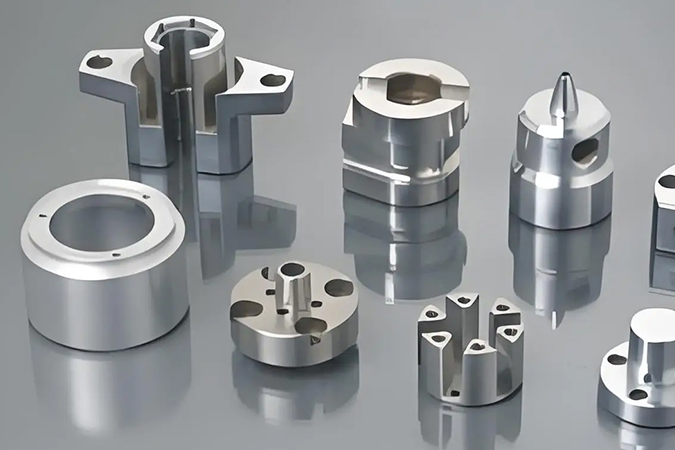
Surface marks, bends, and uneven material flow affect 15–20% of standard extrusions. Cold welds and grain boundary separation account for 58% of production rejections, with thin-wall profiles (≤1.5 mm thickness) especially vulnerable—defect rates exceed 30% in non-specialized facilities due to tearing under stress.
Poor die design causes 35% of material flow inconsistencies, leading to snake bends and speed differentials. Precision-machined dies with <0.005 mm tolerance reduce scrap by 40%, while computational fluid dynamics (CFD) modeling predicts metal flow with 92% accuracy before physical trials, minimizing trial-and-error iterations.
Temperature deviations beyond ±5°C increase surface defect risks by 300%. Inadequate billet preheating creates hot spots, resulting in visible streaks in 28% of aerospace-grade extrusions. Advanced water-quenching systems with real-time thermocouple feedback improve thermal uniformity by 67%, significantly reducing warping and discoloration.
Since 2020, tolerance requirements have tightened by 73%, driven by aerospace and medical sectors demanding ±0.001" accuracy. Over 60% of manufacturers now use 3D profilometry to verify complex geometries, replacing calipers that cannot detect micron-level deviations in multi-channel profiles.
Predictive maintenance extends die life by 60–80%, with ultrasonic crack detection identifying 95% of subsurface flaws. Nitride recoating restores surface hardness to 1,200–1,500 HV, while AI-powered wear analysis reduces unplanned downtime by 42%, ensuring consistent output over extended production runs.
High-precision applications require tolerances as tight as ±0.001", but traditional machinery often exceeds ±0.005" due to thermal expansion and hydraulic inconsistencies. Modern servo-electric presses reduce variability by 60–75% using closed-loop pressure control, aligning with ISO 2768-m standards for critical profile manufacturing.
Carbide inserts and ceramic-coated mandrels endure extrusion forces up to 12,000 PSI without deformation. Nano-coating technologies extend die lifespan by 40%, while laminar flow designs reduce material turbulence by 25%, improving dimensional consistency across long production batches.
CNC automation handles 85–90% of post-extrusion operations:
Segmented process control divides extrusion into 19 independently monitored phases. Real-time adjustments in container heating (zones 4–7) and quenching rates (zones 12–15) eliminate 92% of thermal warping defects, lowering reject rates from 8% to 1.2% in high-tolerance applications.
In-line laser scanners detect sub-0.005" deviations during extrusion, triggering machine learning-based feedback loops that adjust ram speeds within 0.8 seconds. This real-time correction reduces scrap by 35% compared to manual inspection methods.
Advances in aluminium extrusion now enable previously unfeasible geometries by addressing three core challenges:
Extruding walls below 0.5 mm demands strict control of billet temperatures (470–500°C) and extrusion speeds. A 2023 ASM International study found that 62% of thin-wall defects stem from uneven material flow, primarily due to die deflection exceeding 0.003” under load.
Designers now emphasize cross-section symmetry and strategic rib placement to minimize stress concentrations. Industry best practices recommend wall thickness ratios below 3:1 and unsupported spans limited to 8x thickness; exceeding these increases scrap rates by 25% (Aluminum Extruders Council 2024).
For medical devices requiring 0.2 mm micro-channels, engineers used multi-port dies with closed-loop cooling, reducing post-extrusion ovality from ±0.015” to ±0.002”. This met aerospace-grade tolerances while shortening cycle times by 18%.
The EV battery sector requires profiles with 12+ internal chambers for thermal management, driving adoption of 5-axis CNC die-milling. Recent data shows 40% of extrusion plants now dedicate over 25% of capacity to multi-void profiles—a significant rise from 15% in 2020.
Thermal contraction induces 0.1–0.3% dimensional drift in high-silicon alloys. Leading facilities counter this with AI-powered distortion prediction models paired with robotic CNC machining, achieving final tolerances of ±0.0004”—a 60% improvement over manual correction.
Conventional alloys like 6061 and 6005 contribute to 34% of extrusion defects due to hot tearing and inconsistent flow under pressures above 700 bar. They also lack thermal stability, causing inaccuracies in profiles thinner than 1.5 mm—making them unsuitable for high-precision heat sinks and structural frames.
Micro-alloying with zirconium (0.1–0.3%) and scandium (0.05–0.15%) reduces flow stress by 18–22% while maintaining yield strengths over 300 MPa. Enhanced homogenization techniques allow 15% faster extrusion speeds for complex hollow profiles without surface tearing—validated in peer-reviewed trials (ScienceDirect 2024).
Advanced alloys achieve dual optimization through:
An aluminium-lithium alloy (Al-Li 2099), developed for extruded wing spars, reduced component weight by 22% versus traditional materials while meeting FAA fatigue standards. Post-extrusion analysis confirmed consistent wall thickness (±0.05 mm) across 15-meter sections, demonstrating how tailored alloy development meets evolving industrial demands.
Smart automation enables 15–20% faster delivery of intricate profiles. A 2023 industry survey showed 72% of custom orders require design revisions—now resolved rapidly using AI-driven validation tools. Automated nesting algorithms optimize billet usage, cutting waste by up to 12% and accelerating order processing.
Robotic material handling slashes setup times by 40%. Robotic die changers complete tool swaps in under 90 seconds—versus 15 minutes manually—while closed-loop feedback sustains ±0.003" tolerances during continuous 24/7 production of aerospace components.
IoT-enabled presses predict bearing failures 50–80 hours in advance, reducing unplanned downtime by 63%. Energy dashboards show automated thermal management lowers furnace power use by 18% per ton of extruded aluminium. These gains support sustainable manufacturing, where sub-2.5% scrap rates are emerging as the new industry benchmark.
Common defects include surface marks, bends, uneven material flow, cold welds, and grain boundary separation, particularly affecting thin-wall profiles.
Poor die design can lead to material flow inconsistencies such as snake bends and speed differentials. Precision-machined dies can significantly reduce scrap.
Modern machines with technologies like servo-electric presses and CNC automation reduce variability, maintain tight tolerances, and improve overall production consistency.
Innovations include the development of advanced die designs, CNC technology integration, and real-time process control, which enable the production of complex geometries.
New alloys, optimized for strength and extrusion efficiency, use micro-alloying techniques to reduce flow stress and improve tensile strength, allowing for faster and more precise extrusion.
Automation streamlines production processes, reduces lead times, and enhances quality control through smart technologies like robotic handling and AI-driven validation tools.
Shandong RD New Material Co., Ltd. offers high-quality aluminum profiles, pipes, and custom solutions with ISO certifications. Leverage our 17 years of expertise in precision extrusion, CNC machining, and surface treatment for industries worldwide.
No.2399, Yuetan Road, High-tech Industrial Technology Development Zone, Gaomi City, Weifang City, Shandong Province, China.
Copyright © 2025 by RD Alu Group Privacy Policy
 EN
EN


 Hot News