
 EN
EN
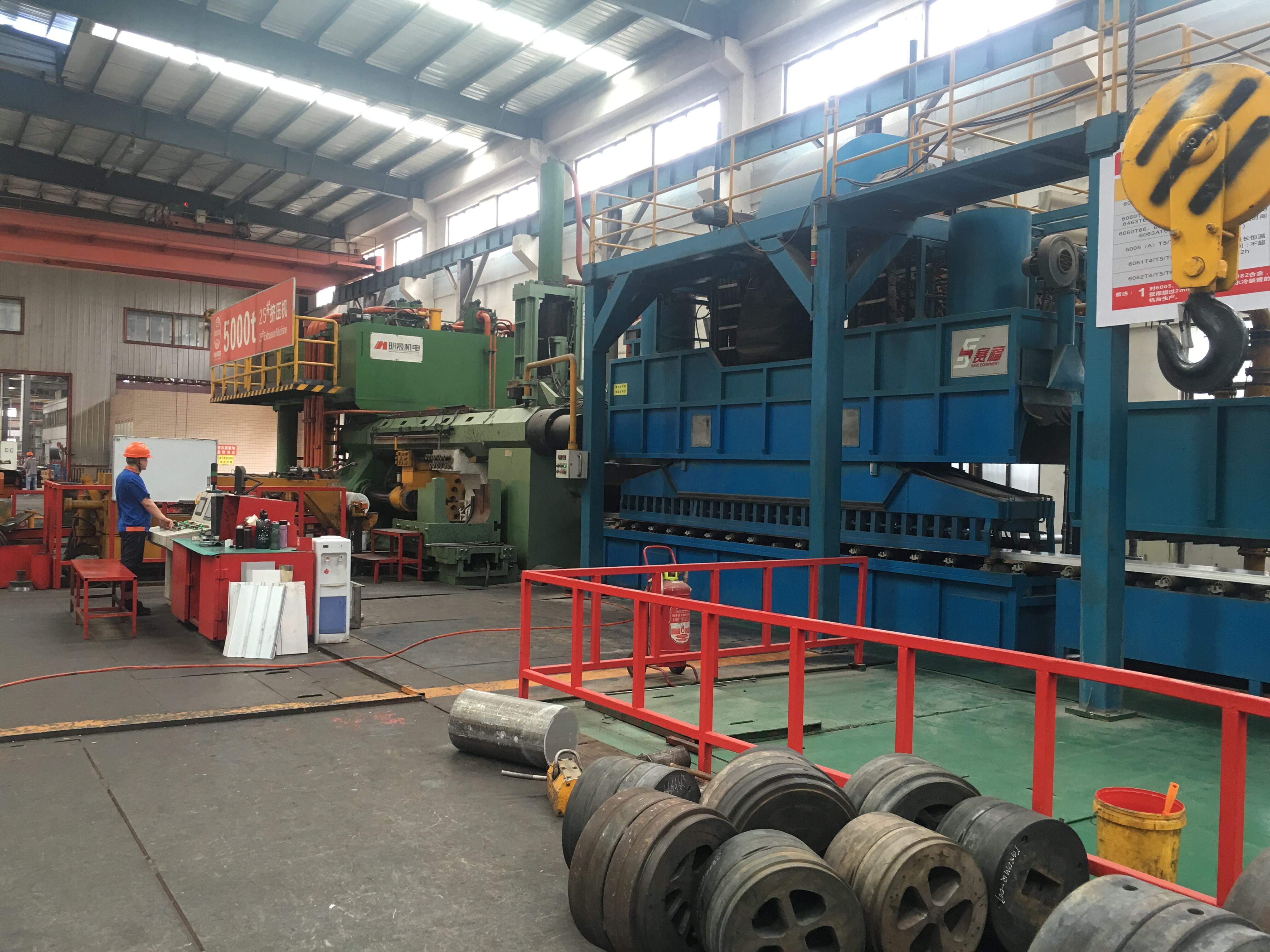
Understanding Key Challenges in Aluminium Extrusion
Common Defects and Root Causes in Aluminium Extrusion
Aluminium extrusion processes face persistent quality challenges, with surface cracks, peeling, and bubbles ranking among the most critical defects. These issues typically originate from three primary factors: inconsistent billet heating temperatures, gas entrapment during material flow, and degraded die surfaces.
The Japan Society for Precision Engineering (2023) reports that fewer than 15% of manufacturers achieve defect rates below 3% in thin-walled extrusions for aerospace applications, highlighting the precision required in high-tech industries.
The Role of Tolerances in Extrusion Accuracy (±0.001³)
Achieving ±0.001³ tolerances demands meticulous control over press forces, temperature stability, and die alignment. This precision threshold is essential for medical device components, automotive structural parts, and electronics heat sinks.
A 2023 industry survey revealed that manufacturers using servo-controlled extrusion presses reduced tolerance violations by 47% compared to hydraulic systems, though operational costs increased by 18–22%.
Impact of Die Wear, Misalignment, and Surface Defects
Progressive die wear alters material flow dynamics, leading to surface scratches after 10–15 extrusion cycles, profile twists exceeding 0.3° per meter in misaligned setups, and increased scrap due to inconsistent wall thickness.
The Chinese Academy of Engineering Sciences (2023) found that laser-guided die alignment systems reduced surface defects by 34% in automotive extrusion production.
Thermal Management and Material Flow Inconsistencies
Temperature gradients exceeding 12°C/cm account for 58% of warping incidents in wide-profile extrusions. Advanced solutions include multi-stage cooling beds with zone-specific temperature control, AI-powered flow prediction models, and isothermal extrusion techniques.
These innovations have enabled leading manufacturers to reduce thermal-related scrap by 29% while improving production speeds by 15%, according to the Asia-Pacific Aluminium Extrusion Market Report (2023).
How CNC Machines Enhance Precision in Aluminium Extrusion
Modern CNC (Computer Numerical Control) systems address aluminium extrusion challenges by combining digital accuracy with mechanical reliability. Through programmable toolpaths and closed-loop feedback, they achieve positional repeatability within ±0.001" across production runs.
How CNC Machines Improve Dimensional Consistency
CNC technology enforces strict geometric compliance by compensating for thermal expansion and material springback in real time. A 2024 Precision Manufacturing Report found CNC-controlled extrusion processes reduce dimensional variance by 58% compared to hydraulic systems—critical for automotive chassis components and architectural fenestration.
Integration of CNC Control in Extrusion Press Operations
Advanced CNC controllers now directly interface with extrusion presses, synchronizing billet heating, ram speed, and quenching parameters. This integration reduces profile twisting defects by 41% (Journal of Advanced Manufacturing, 2023), especially in complex multi-void extrusions for heat sinks and solar panel rails.
Case Study: Reducing Scrap Rates by 32% Using CNC Synchronization
A leading aerospace supplier achieved a 0.87% material waste rate by linking their 25MN extrusion press with CNC-guided stretch straightening equipment. The synchronized system automatically adjusts pull forces based on real-time laser measurements, eliminating manual trial-and-error adjustments during thin-wall tube production.
Automated Quality Control: Real-Time Monitoring and Feedback
Real-time monitoring with laser profilometry and vision systems
Modern extrusion lines use laser profilometry and machine vision systems to capture cross-sectional dimensions at over 500 measurements per second. These systems detect surface defects as small as 5μm and dimensional deviations beyond ±0.001", enabling immediate intervention before profiles enter cooling beds.
Closed-loop feedback for immediate process correction
When sensors detect thermal gradients exceeding 8°C/meter or press misalignments greater than 0.15mm, automated controls initiate parameter adjustments within 300ms. This rapid response prevents defect propagation, reducing material waste by 18–22% compared to manual workflows. Operators receive prioritized alerts via augmented reality interfaces while the system auto-corrects:
- Ram speeds adjust for billet temperature variances
- Container pressures rebalance to maintain ±1.5% material flow consistency
- Die deflection compensators activate to counteract elastic deformation
Balancing automation and operator expertise in quality assurance
While automated systems process 97% of inspection data, experienced technicians remain vital for interpreting complex anomalies flagged as "uncertain" by AI classifiers, calibrating vision systems for new alloy reflectivity profiles, and validating machine learning models against physical samples every 45 production cycles.
This hybrid approach achieves 99.96% defect detection accuracy while preserving human oversight for optimization and exception handling.
Innovations Driving Tighter Tolerances in Extrusion Processes
Advanced Die Design: Bearing Length and Thermal Compensation
Modern extrusion achieves ±0.001" tolerances through optimized bearing length ratios (1.5:1 to 3:1), which stabilize material flow. Thermal compensation systems counteract die deflection by 18–22 microns/°C using active cooling channels, ensuring consistent profile geometry across long production runs.
Extrusion Process Innovations Enabling ±0.001" Tolerances
Closed-loop control of billet temperature (±1.5°C) and ram speed (0.01 mm/s resolution) minimizes dimensional drift. Twin-chamber containers with 8,000–12,000 ton capacities achieve 94–97% material utilization, reducing post-machining needs by 40% (Aluminum Association 2024).
AI-Driven Simulation for Pre-Production Optimization
Deep learning algorithms trained on more than 50,000 extrusion simulations predict die performance with 92% accuracy, reducing trial runs from 6–8 iterations to just 1–2. Manufacturers report 32% faster development cycles for complex profiles such as multi-void heat sinks.
Emerging Techniques in Light Alloy Manufacturing
Hybrid extrusion combines direct cooling (300–500°C/s quench rates) with adaptive stretching to compensate for alloy-specific shrinkage. Recent advances in 7000-series alloys now support wall thicknesses under 0.5mm while maintaining ±0.002" straightness over 10-meter spans.
19 High-Performance Machines Transforming Aluminium Extrusion Output
Breakdown of 19 Machines Boosting Precision and Throughput
The modern aluminum extrusion process depends on around 19 different kinds of machines that each tackle particular problems during manufacturing. Servo presses running at high speeds can achieve really tight tolerances of about 0.001 inches thanks to their ability to adjust pressure as needed. Meanwhile, these multi stage stretch straighteners work to fix distortions right away during production. For automated billet heating systems, keeping temperatures stable within plus or minus 3 degrees Celsius makes a big difference. This kind of temperature control helps cut down on material flow issues by roughly 40 percent when compared with older methods. Manufacturers find this improvement particularly valuable for maintaining consistent product quality across batches.
| Capability | Traditional Machines | Advanced Machines |
|---|---|---|
| Tolerance Range | ±0.005" | ±0.001" (ISO 286) |
| Production Speed | 12 m/min | 28 m/min (4.5X faster) |
| Energy Consumption | 850 kWh/ton | 520 kWh/ton (2024 avg.) |
| Defect Detection Rate | Manual sampling | 100% real-time scanning |
Strategy: Phased Integration of High-Performance Equipment
Leading plants adopt a three-stage implementation model:
- Pilot Phase: Retrofit legacy presses with IoT-enabled load sensors (8–12 week ROI)
- Hybrid Phase: Pair new extrusion stems with AI-driven temperature controllers
- Full Integration: Install closed-loop CNC systems achieving 99.2% dimensional consistency
This phased strategy reduces capital risk by 65% compared to full-system overhauls while delivering 32% scrap reduction within the first production year. Operators retain manual override capabilities during transitions, ensuring uninterrupted output while adapting workflows.
Frequently Asked Questions
What are the common defects in aluminium extrusion, and how can they be mitigated?
Common defects include surface cracks, peeling, and bubbles, mainly due to inconsistent billet heating, gas entrapment, and degraded die surfaces. Mitigation involves better thermal management, die alignment, and employing advanced technologies like CNC control systems.
How do CNC machines improve the precision of aluminium extrusion?
CNC machines enhance precision by enforcing geometric compliance, compensating for thermal expansion, and synchronizing various press operations, which reduces dimensional variance significantly compared to traditional systems.
What role does automation play in quality control for aluminium extrusion processes?
Automation plays a crucial role by providing real-time monitoring and feedback, enabling immediate process corrections to prevent defects, improving overall efficiency, and achieving high defect detection accuracy.
How can manufacturers achieve tighter tolerances in aluminium extrusion?
Manufacturers can achieve tighter tolerances through advanced die designs, optimized bearing lengths, AI-driven simulations, and emerging hybrid extrusion techniques, ensuring consistent quality and reduced waste.
What are the benefits of integrating high-performance equipment in extrusion processes?
Integrating high-performance equipment offers benefits like improved precision, faster production speeds, reduced energy consumption, real-time defect detection, and overall enhanced product quality and consistency.
Table of Contents
- Understanding Key Challenges in Aluminium Extrusion
- How CNC Machines Enhance Precision in Aluminium Extrusion
- Automated Quality Control: Real-Time Monitoring and Feedback
- Innovations Driving Tighter Tolerances in Extrusion Processes
- Advanced Die Design: Bearing Length and Thermal Compensation
- Extrusion Process Innovations Enabling ±0.001" Tolerances
- AI-Driven Simulation for Pre-Production Optimization
- Emerging Techniques in Light Alloy Manufacturing
- 19 High-Performance Machines Transforming Aluminium Extrusion Output
- Breakdown of 19 Machines Boosting Precision and Throughput
- Strategy: Phased Integration of High-Performance Equipment
-
Frequently Asked Questions
- What are the common defects in aluminium extrusion, and how can they be mitigated?
- How do CNC machines improve the precision of aluminium extrusion?
- What role does automation play in quality control for aluminium extrusion processes?
- How can manufacturers achieve tighter tolerances in aluminium extrusion?
- What are the benefits of integrating high-performance equipment in extrusion processes?