
 EN
EN
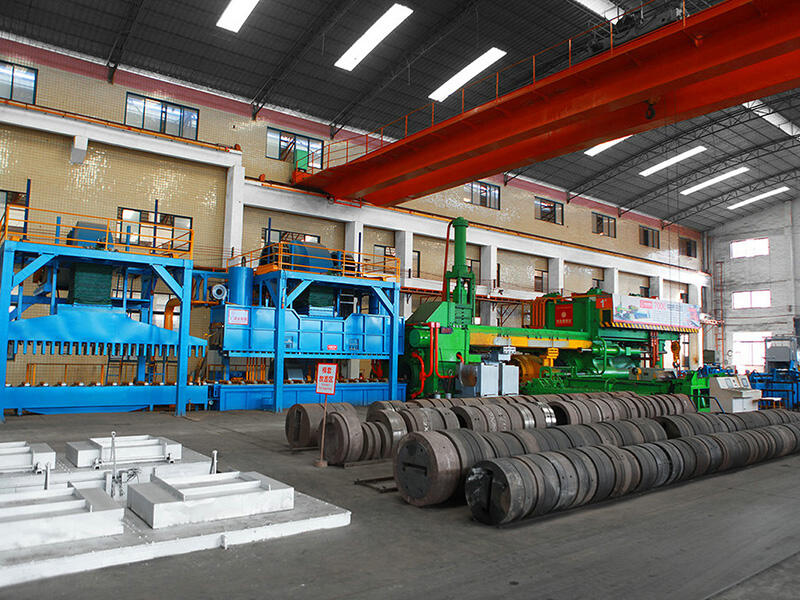
The True Cost of Custom Aluminum Defects
Common Defects in Aluminum Die Casting and Their Financial Impact
Defects in custom aluminum die casting cost manufacturers an average of $74,000 annually in scrap and rework (NADCA 2022). The most costly flaws include:
- Porosity (air pockets weakening structural integrity)
- Cold shuts (incomplete material fusion creating failure points)
- Surface cracks from uneven cooling
These defects typically add 18–30% to production costs by extending cycle times and requiring secondary quality checks. A 2023 foundry study showed parts needing post-casting machining due to defects incurred 62% higher labor costs than first-pass successes.
Porosity in Aluminum Castings: Causes and Consequences
Porosity accounts for 41% of all custom aluminum casting rejections (Aluminum Casting Institute 2023). Two primary types drive failures:
- Gas porosity: Trapped air bubbles from improper venting
- Shrinkage porosity: Voids forming during uneven solidification
This defect reduces load-bearing capacity by up to 35% in structural components while increasing susceptibility to stress corrosion. A case study of automotive brackets revealed porosity-related warranty claims cost $15,000 per 1,000 units due to premature fatigue failures.
Gas Porosity Due to Turbulence in Pouring: A Leading Defect Source
Uncontrolled molten metal flow creates turbulent conditions that trap 3–7% air volume in castings (Journal of Materials Processing Tech 2022). Key drivers include oversized gates causing velocity spikes, sharp directional changes in runners, and inadequate vent placement.
Advanced simulation tools reduce gas porosity by 40% through optimized gating system design, though 22% of foundries still rely on trial-and-error methods according to a 2024 industry survey.
The Importance of Design in Custom Aluminum Die Casting Success
The battle against defects actually starts when designs are first drafted on paper. According to recent industry data from NADCA, around two thirds of all casting problems come down to poor design choices that ignore what's possible during actual manufacturing. When working on custom aluminum parts, designers face the challenge of reconciling visual appeal with what works in practice. They need to consider things like how liquid metal moves through molds and how materials shrink as they cool. Real world results show promise too. Companies that brought together their design teams with foundry experts saw significant improvements. One manufacturer reported cutting scrap waste related to air pockets by almost 40% just by having these cross department discussions for automotive transmission components.
Key Design Considerations: Wall Thickness, Draft Angles, Fillets, and Parting Lines
Four geometric factors dominate casting quality in custom aluminum projects:
- Uniform wall thickness (3–5mm optimal) prevents uneven cooling stresses
- 1–3° draft angles enable clean mold separation without drag marks
- 0.5–1.5mm fillet radii eliminate stress concentrations at corners
- Strategic parting line placement minimizes finishing costs and flash formation
These parameters create a "manufacturing-friendly" design DNA that supports consistent mold filling and dimensional accuracy across production runs.
Design Strategies to Enhance Strength and Reduce Failure Risk in Custom Aluminum Parts
New simulation software is changing how engineers approach fatigue failures right from the start of product development. When designers tweak rib placements near stress points and match material grain directions to where forces actually travel, they're seeing about 15 to 20 percent better performance against impacts in those critical aerospace bracket components according to ASM International's latest findings. Another big win comes when manufacturers coordinate part shapes with mold gate designs at the same time. This approach cuts down on those pesky air bubbles caused by turbulent flows inside molds, resulting in roughly 43% fewer defects in plastic cases for gadgets we use every day.
Seamless Design-Mold Integration for Precision and Quality
Defect prevention through integrated design and mold development
When design and mold engineers start working together from day one, they can cut down on those pesky preventable defects in custom aluminum die casting by around 78%, according to the latest Casting Quality Report for 2023. The trick is running simulations of how materials actually flow through the system and what happens with heat distribution during the initial design stages. This lets the team spot potential problems such as parts cooling at different rates or areas where stress might build up long before any actual tooling gets made. And speaking of savings, companies adopting this kind of forward thinking tend to see about 60% fewer last minute engineering adjustments than firms sticking to old school methods where departments work in isolation until something breaks down.
Optimizing mold design and running system synergy for custom aluminum
Strategic gate placement and conformal cooling channels ensure consistent fill rates across complex geometries unique to aluminum alloys. For high-strength components, mold designers prioritize:
- Flow balance – Minimizes turbulence that causes gas entrapment
- Ejection optimization – Reduces drag marks on thin-wall sections
- Thermal symmetry – Prevents differential shrinkage in load-bearing features
Case study: Reducing scrap rates by 40% with concurrent design-mold iteration
One medical device company got ISO 13485 certified after setting up these real time feedback systems connecting their CAD designs with actual mold testing. When they ran virtual simulations, something interesting happened. They found out there was this important relationship between rib thickness measurements around 1.2 mm plus or minus 0.05 mm and what kind of venting the parts needed. Traditional design for manufacturing checklists just didn't catch those connections. After going through three rounds of prototype testing, they figured out better places for the ejector pins and adjusted overflow areas properly. All this work cut down on machining costs after production started by about 32 percent without compromising the surface finish quality required by FDA standards.
Cooling Rate and Uniformity: How Mold Design Shapes Microstructure and Quality
How well we control temperatures during mold design really affects whether those custom aluminum parts hold together properly. When different parts cool at different speeds, it creates these stress points that eventually crack before their time. And when this happens, companies lose around eight thousand six hundred dollars each occurrence because production stops dead (according to NADCA data from last year). The newer conformal cooling channel designs actually cut down on those temperature differences by somewhere between forty to sixty percent compared with old fashioned straight drilled systems. This makes grains form more evenly throughout the metal, which matters a lot for things like airplane parts and car components where reliability is absolutely essential.
Casting Temperature Control and Its Influence on Defect Formation
Maintaining ±7°C of target pour temperatures prevents 83% of gas-related porosity defects in aluminum die casting (AFS 2022). Excess heat accelerates mold degradation, while insufficient temperatures cause incomplete filling—both scenarios increasing scrap rates by 27% in production batches. Closed-loop thermal monitoring systems now achieve 99.5% temperature stability across 8-hour production runs.
Alloy Selection and Process Parameter Optimization for Consistent Results
Matching alloy fluidity indexes to component geometry reduces surface defects by 35% in thin-walled aluminum castings. A 2021 Automotive Supplier Consortium study found optimizing zinc content (3.5–4.3%) and injection pressures (80–120 MPa) decreased heat-check failures in transmission housings by 52%. Real-time viscosity sensors adjust parameters mid-cycle, maintaining dimensional tolerances below ±0.12mm.
FAQ
What are the common defects in aluminum die casting?
Common defects include porosity, cold shuts, and surface cracks, which significantly impact production costs.
How does porosity affect aluminum castings?
Porosity decreases load-bearing capacity and increases susceptibility to stress corrosion, leading to structural failures.
What strategies can prevent casting defects?
Design integration, simulation tools, optimized gating systems, and temperature control are crucial to defect prevention.
What role does alloy selection play in casting quality?
Optimizing alloy composition and fluidity reduces surface defects and enhances the quality of casted components.
Table of Contents
- The True Cost of Custom Aluminum Defects
- The Importance of Design in Custom Aluminum Die Casting Success
- Key Design Considerations: Wall Thickness, Draft Angles, Fillets, and Parting Lines
- Design Strategies to Enhance Strength and Reduce Failure Risk in Custom Aluminum Parts
- Seamless Design-Mold Integration for Precision and Quality
- Cooling Rate and Uniformity: How Mold Design Shapes Microstructure and Quality
- Casting Temperature Control and Its Influence on Defect Formation
- Alloy Selection and Process Parameter Optimization for Consistent Results
- FAQ