
 EN
EN
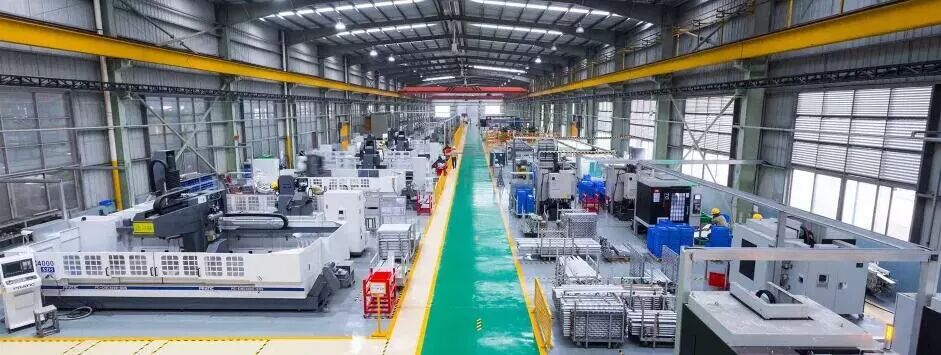
Optimized Die Design for Aluminium Extrusion Precision
CAD/FEA-Driven Geometry Optimization to Balance Metal Flow and Meet Tolerances
Getting accurate aluminium extrusions depends heavily on the shape of the dies used during production. These days, most engineers rely on advanced CAD software to create detailed models of complicated shapes with pretty good precision. At the same time, FEA simulations help predict exactly how materials will act when subjected to the pressures of extrusion processes. Manufacturers spend time running virtual tests on different bearing lengths and port setups so they can spot any flow problems long before making actual prototypes. The whole process cuts down on physical testing by around 40%, which saves both time and money. What's more important is achieving consistent dimensions within about 0.1mm tolerance. This level of accuracy becomes absolutely critical in industries like aerospace and automotive manufacturing, where even tiny deviations from specifications can cause major issues later on.
H-13 Die Material Selection, Bearing Length Tuning, and Thermal Deformation Control
H13 hot work steel stands out as the go to option for dies because it handles thermal fatigue really well, working reliably at temperatures around 500 to 550 degrees Celsius. The bearing length gets adjusted based on how complex the part profile is, usually somewhere between 2 and 8 millimeters. This helps keep exit speeds consistent even when different sections vary in thickness. Cooling channels built right into the die keep temperatures stable, staying within about 5 degrees Celsius of what's needed. Such temperature control cuts down on thermal warping by roughly 60 percent over traditional approaches. For manufacturers running large batches, this means parts come out with much better dimensional consistency from start to finish.
Real-Time Process Control in Aluminium Extrusion
Closed-Loop Temperature and Pressure Regulation via Embedded Sensors
Sensors embedded throughout the system keep track of billet temperatures and the pressure during extrusion, sending all this information to a control system that makes adjustments on the fly. When temperatures go beyond plus or minus 5 degrees Celsius or when pressure hits over 50 bar, the system kicks in right away to fix things before problems happen. These kinds of issues can lead to surface cracks, visible die lines, and those pesky internal stresses we always want to avoid. The ability to regulate everything in real time really helps improve how the metal flows through the system and keeps dimensions accurate. According to some industry research papers on extrusion efficiency, manufacturers have seen their scrap rates drop by around 18% thanks to these kinds of monitoring systems.
Adaptive Quenching Profiles for Uniform Cooling and Dimensional Stability
Cooling after extrusion plays a vital role in setting the material's strength characteristics and preserving the intended shape. Modern adaptive quenching systems adjust the mix of water and air as the profile moves through the cooling zone. These systems compensate for differences in cross-sectional thickness across the product. When dealing with thicker parts, the cooling gets stronger so these areas solidify at similar rates to the thinner sections nearby. This careful control helps avoid unwanted deformation and keeps dimensions within tight ±0.1mm specifications. For manufacturers producing precision parts used in aircraft engines or car transmissions where even minor deviations matter, this level of control becomes essential to meeting quality standards and avoiding costly rework.
Integrated Quality Assurance for Aluminium Extrusion Precision
Tolerance Gap Analysis: AA Standards vs. Real-World Achievable Precision
The Aluminum Association sets out what should happen with dimensional tolerances in theory, but when it comes down to actual manufacturing, things get complicated fast. Thermal expansion, worn dies, and inconsistent materials can push those measurements way beyond the 0.1mm mark in large production batches. Smart factories don't just rely on AA specs they look at what actually happens on the shop floor. They match up those official numbers with what their machines are really producing day after day. Sticking to global standards such as ISO 2768 and ASTM B221 helps keep everything consistent across different plants too. What works best for most shops is balancing between what's technically possible and what makes economic sense. This keeps engineers from designing parts that are too perfect, cuts down on wasted material, and saves money by concentrating attention where it matters most in the final product.
In-Line Metrology and Statistical Process Control (SPC) Implementation
Inline metrology systems including laser scanners and coordinate measuring machines allow for ongoing checks of dimensions while materials are being extruded. Pairing these with Statistical Process Control or SPC helps manufacturers keep an eye on important factors such as heat levels, pressure readings, and how fast the ram moves through the material. The whole point is catching problems before they get out of hand. Regular monitoring keeps everything running smoothly, cuts down on faulty products, and means fewer fixes needed after production starts. For shops focused on making high precision parts, this approach saves time and money across the board.
Upstream Process Optimization to Support Aluminium Extrusion Precision
Getting the upstream processes right matters a lot when it comes to producing high precision parts. Billet prep work, managing temperatures properly, and calibrating those extrusion presses all play critical roles in the final product quality. When billets aren't consistent in quality, dimensional accuracy takes a hit. That's why checking alloy compositions thoroughly and running proper homogenization cycles becomes so important before any actual extrusion happens. Keeping temperatures within about plus or minus 5 degrees Celsius during preheating stops those annoying flow problems that can warp the finished product. Modern extrusion equipment now has better controls that match ram speeds with pressure settings, which cuts down on wall thickness variations to under 0.1 millimeters most of the time. Looking back at past extrusion data through AI tools gives manufacturers a head start on finding good parameter settings for new profiles, cutting down on how many test runs they need to do. Putting Statistical Process Control (SPC) into practice early on in production actually cuts downstream defects by around 30 to 40 percent. Most shops will tell you that well over half of all dimensional issues come from problems that started way back in these upstream operations.
FAQ Section
What materials are commonly used for aluminium extrusion dies?
H13 hot work steel is commonly used for aluminium extrusion dies due to its ability to handle thermal fatigue effectively and perform reliably at high temperatures.
Why is real-time process control important in aluminium extrusion?
Real-time process control is crucial as it helps in monitoring billet temperatures and pressure during extrusion, preventing issues such as surface cracks and die lines, and improving the overall dimensional accuracy of the extrusions.
How does adaptive quenching contribute to extrusion precision?
Adaptive quenching systems adjust cooling based on the cross-sectional thickness of the extrusions, ensuring uniform cooling, dimensional stability, and preventing unwanted deformation.
What role does inline metrology play in quality assurance?
Inline metrology, along with Statistical Process Control, allows for continuous monitoring of dimensions during extrusion, facilitating early detection and correction of potential defects.